
Categories
BuyerPublished March 16, 2026
Top 10 Fees When Buying a Home in Orlando, FL

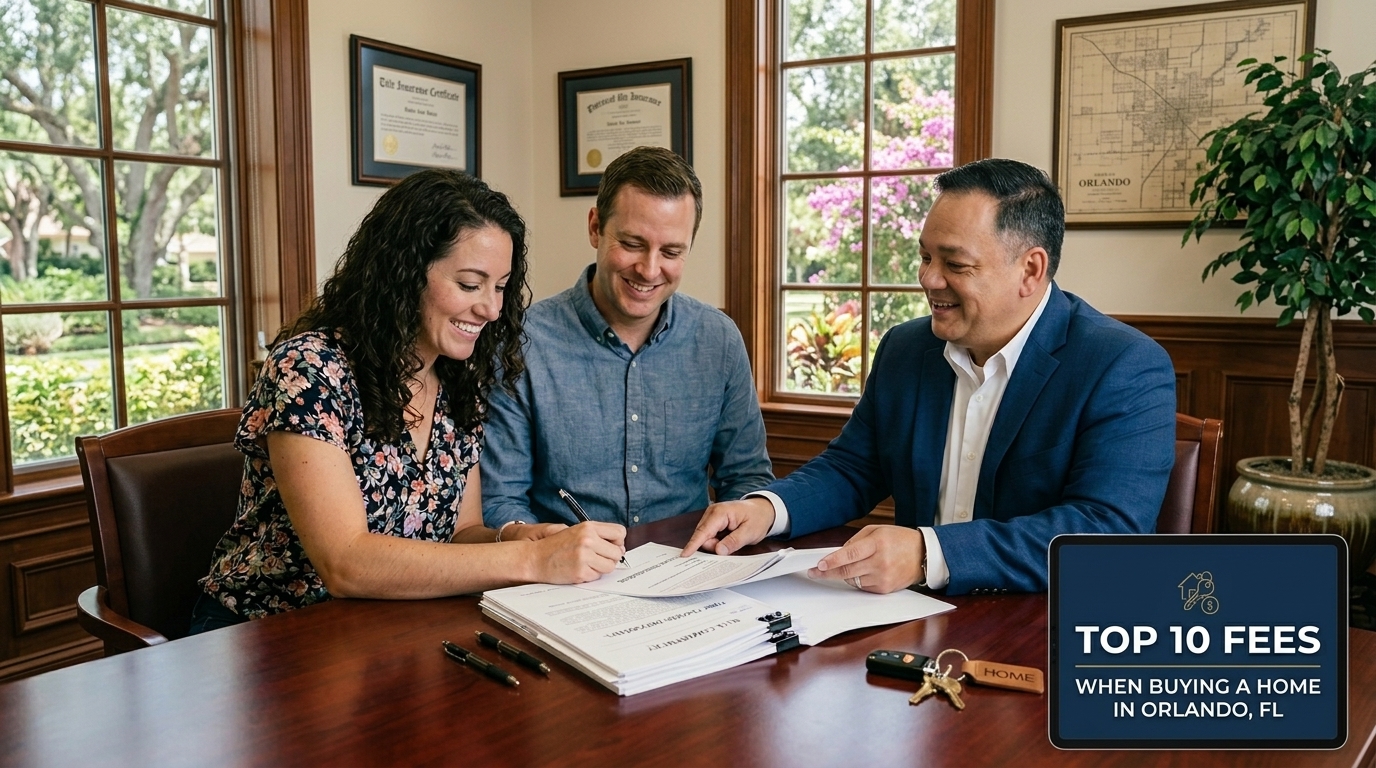
Top 10 Fees to Know When Buying a Home in Orlando, FL (So Nothing Catches You Off Guard at Closing)
Most buyers in the Orlando, FL area come to the table focused on one number: the purchase price. That focus is understandable, but it leaves out a significant portion of what you will actually spend to close on a home. In the Central Florida real estate market, the gap between what buyers expect to pay and what they actually owe at the closing table is one of the most common sources of stress, delays, and last-minute renegotiations.
The good news is that every one of these fees is predictable. If you work with a knowledgeable buyer agent in Davenport FL or anywhere across the Orlando metro, none of this should surprise you. Understanding what is coming before you make an offer is one of the most important steps a buyer can take, and it is covered in detail in our guide on what to do before buying a home in Davenport, FL.
This post breaks down the 10 fees that matter most, what drives their cost, and how a top REALTOR in the Orlando area helps you prepare for every single one.
Why Most Buyers Are Caught Off Guard
Lenders are required to give you a Loan Estimate within three business days of receiving your application. That document lists many of the fees you will see at closing. But the Loan Estimate is an estimate, not a final bill, and it does not always reflect local norms, HOA transfer fees, title company choices, or prepaid items that vary by property.
What fills in that gap is experience. A buyer agent who works the Orlando, Kissimmee, Celebration, Champions Gate, and Four Corners markets daily knows what a realistic closing cost picture looks like before you ever walk into a home. That preparation changes the entire dynamic of your offer, your negotiation, and your financial readiness.
What Does It Really Cost to Buy a Home in Orlando, FL?
Total buyer closing costs in Florida typically range from 2% to 5% of the purchase price, depending on loan type, lender, title company, and property-specific factors. On a $380,000 home, that is between $7,600 and $19,000 in addition to your down payment.
Here is where that money goes.
The 10 Fees Every Orlando Home Buyer Needs to Know
1. Loan Origination Fee
This is what your lender charges to process and underwrite your mortgage. It is typically expressed as a percentage of the loan amount, often between 0.5% and 1%. On a $350,000 loan, that is $1,750 to $3,500. Some lenders advertise zero-origination loans, but the cost is usually built into a higher interest rate instead.
2. Appraisal Fee
Before your lender funds the loan, they require an independent appraisal to confirm the home's market value supports the purchase price. In the Orlando and Central Florida market, appraisal fees currently run between $450 and $650 for a standard single-family home. This is typically paid upfront, before closing.
3. Home Inspection Fee
A home inspection is not required by your lender, but skipping it is one of the most expensive decisions a buyer can make. A licensed inspector evaluates the structure, roof, electrical, plumbing, HVAC, and more. Inspections in the Orlando area typically cost between $300 and $500, with additional fees for specialty inspections like wind mitigation, four-point, or pool inspections. This is money that protects your equity from day one.
4. Title Search and Title Insurance
Florida uses title companies to conduct closings, and buyers pay for both a title search and lender's title insurance. The title search confirms there are no liens, judgments, or ownership disputes tied to the property. Lender's title insurance protects the bank's interest in the event of a title defect. An owner's title insurance policy is optional but strongly recommended. Combined, these fees typically range from $700 to $1,500 depending on the purchase price and the title company selected.
5. Doc Stamp Tax on the Mortgage
Florida charges a documentary stamp tax on mortgages at a rate of $0.35 per $100 of the loan amount. On a $350,000 mortgage, that is $1,225. This is a state tax, not a negotiable fee, and it applies to conventional, FHA, and VA loans alike. It is listed on your Closing Disclosure and is one of the fees buyers are often surprised to see for the first time.
6. Intangible Tax on the Mortgage
Florida also charges an intangible tax on new mortgages at $0.002 per dollar of the loan. On a $350,000 loan, that adds another $700. Like the doc stamp tax, this is a non-negotiable state fee that every buyer with a mortgage pays. Understanding these two taxes together is part of building an accurate budget, which is why our resource on budgeting beyond the purchase price is worth reading before you start shopping.
7. Prepaid Interest
Your first mortgage payment is typically due the first of the month following your closing. But interest begins accruing the day you close. Prepaid interest covers the days between your closing date and the end of the month. If you close on March 16th, you prepay 15 days of interest. On a 7% loan for $350,000, that is roughly $1,000. Closing earlier in the month means more prepaid interest; closing at the end of the month reduces it significantly.
8. Homeowners Insurance (Prepaid)
Your lender requires you to have a full year of homeowners insurance paid at or before closing. In Florida, insurance costs have risen substantially over the past several years due to storm exposure and carrier exits from the market. In the Orlando metro and Polk County areas, annual premiums for a single-family home now commonly range from $2,500 to $4,500 or more depending on age, construction type, and location. This is a fee many buyers budget too low for.
9. Property Tax Escrow
Lenders require an escrow account to collect and pay property taxes on your behalf. At closing, you will typically prepay two to three months of estimated property taxes into that escrow account. Florida property taxes are paid in arrears, meaning you are paying for what the previous owner already used. The exact amount depends on the assessed value of the home and the millage rate in your county, whether that is Orange County, Polk County, or Osceola County.
10. HOA Transfer Fees and Estoppel
This is the fee that blindsides buyers most often in the Orlando and Four Corners markets. Many communities in Champions Gate, Celebration, Kissimmee, and throughout Davenport are governed by homeowners associations. When a home sells, the HOA issues an estoppel letter confirming the seller's account is current and outlining the buyer's obligations. Florida law caps the estoppel fee, but buyers may also owe HOA transfer fees, capital contribution fees, and the first month or quarter of dues at closing. In some communities, this line item runs $500 to $2,000.
Is Getting Pre-Approved the First Step Before Worrying About Fees?
Yes, and no. Pre-approval tells you what you can borrow. But understanding closing costs tells you what you actually need in the bank to make the transaction work. These are two separate conversations, and both matter. A buyer agent who works the Orlando and Davenport FL market regularly will walk you through both before you submit an offer, so you are never caught short.
If you have not gone through pre-approval yet, start with our breakdown of why pre-approval matters before buying in Davenport, FL and use the mortgage calculator to model your monthly payment at different price points.
What Buyers Misunderstand About Closing Costs
One of the most common misconceptions is that closing costs are fixed. They are not. Several of these fees are negotiable, and a skilled buyer agent in the Orlando FL market knows exactly which ones to target.
Seller concessions are one of the most effective tools in the current Central Florida real estate market. In the right conditions, a seller can contribute toward your closing costs, effectively reducing what you bring to the table at closing without reducing the purchase price in a way that affects your appraisal. This is a strategy that requires timing, market knowledge, and negotiation skill to execute correctly.
Your lender's choice also changes your cost picture. Shopping lenders, comparing their Loan Estimates, and understanding how rate buydowns affect your long-term costs are decisions that a knowledgeable buyer consultation should cover from the start.
What Does a Top REALTOR in Orlando Actually Do Differently?
The difference between working with any licensed agent and working with the best REALTOR in Davenport FL or Orlando is not just access to the MLS. It is the preparation, the process, and the advocacy.
A top buyer agent will:
- Build a full cost-of-purchase estimate before you tour homes, not after you fall in love with one
- Identify HOA documents, estoppel timelines, and community-specific fees during the due diligence period
- Negotiate seller concessions toward closing costs when market conditions allow
- Coordinate with your lender on prepaid timing to optimize your closing date
- Help you interpret the Closing Disclosure so nothing surprises you the day before closing
This is the practical difference between an agent who shows you houses and an advisor who guides you through a transaction.
What Happens If You Wait?
Some buyers put off starting the process because they feel they do not have enough saved. The risk in waiting is that the market moves. Interest rates shift. Inventory tightens. Home equity you could be building instead goes toward rent. The fees listed in this post are real, but they are also finite. Most of them are one-time costs. The cost of waiting, on the other hand, compounds.
If you are trying to determine whether your savings are in the right range, the affordability calculator is a practical first step.
Ready to Know Exactly What Buying Will Cost You?
The smartest move a buyer can make in the Orlando, FL market right now is to get a full financial picture before falling in love with a home. That means understanding your purchase power, your estimated closing costs, and the specific fees tied to the neighborhoods and communities you are targeting.
Schedule a buyer consultation today and get a clear, honest breakdown of what your purchase will actually cost from offer to keys. There are no surprises when you plan ahead.
Start Your Home Search | Let's Connect
Frequently Asked Questions
How much should I budget for closing costs when buying a home in Orlando, FL? Most buyers in the Orlando and Central Florida market should budget between 2% and 5% of the purchase price for closing costs, in addition to their down payment. On a $380,000 home, that means setting aside $7,600 to $19,000. The exact number depends on your loan type, chosen title company, HOA fees, and how your closing date falls within the month. A buyer consultation with an experienced REALTOR near you can give you a property-specific estimate before you make an offer.
Can the seller pay my closing costs in Orlando, FL? Yes. In the current Central Florida real estate market, seller concessions toward buyer closing costs are a negotiable component of many transactions. Whether a seller will agree depends on market conditions, the property, and how the offer is structured. A skilled buyer agent in the Orlando or Davenport FL area knows how to frame this negotiation so it does not undermine your offer's competitiveness.
What is the doc stamp tax and do all Florida buyers pay it? The documentary stamp tax on a mortgage is a Florida state tax charged at $0.35 per $100 of the loan amount. It applies to conventional, FHA, and VA loans. On a $350,000 mortgage, this fee is $1,225. It is not negotiable and does not change regardless of which lender or title company you use. Florida also charges a separate intangible tax on new mortgages at $0.002 per dollar of the loan.
Are HOA fees part of closing costs when buying in Orlando? They can be. If the home you are buying is in a community with a homeowners association, you may owe an estoppel fee, a transfer fee, a capital contribution, and the first installment of dues at closing. In communities throughout Champions Gate, Celebration, and Four Corners, these HOA-related charges at closing can range from $500 to $2,000. Your agent should request HOA documents early in the due diligence period so you know what to expect.
What is the difference between lender's title insurance and owner's title insurance? Lender's title insurance protects the mortgage company's financial interest in the property if a title defect is discovered after closing. It is required when you finance a purchase. Owner's title insurance protects your own interest in the property and is optional in Florida, though strongly recommended. If a prior lien, unpaid judgment, or ownership dispute surfaces after you close, owner's title insurance covers the legal costs and potential financial loss.
|


or another way